

Athletes increasingly treat signature celebrations—like Usain Bolt’s pose or Michael Jordan’s dunk—as valuable intellectual property, registering them as trademarks to capture their commercial identity. Trademark law can protect either motion sequences or stylized images tied to a specific person. However, generative AI now challenges this system by replicating gestures without copying original footage, blurring concepts like ownership and consumer confusion. The story from the World Intellectual Property Organization argues (WIPO) that traditional trademark frameworks may no longer suffice, suggesting a need for stronger personality or publicity rights to safeguard identity in an era of synthetic media and digital imitation.
Sports

In choreographed sports, music is essential but often used without proper licensing, exposing athletes and organizers to legal risks. After lawsuits highlighted the problem, former world champion cheerleader Chantal Epp founded ClicknClear to provide a solution. The platform enables athletes to quickly license music from millions of tracks and ensures compliance through verification tools. Used across sports like gymnastics and figure skating, it addresses a major gap caused by fragmented rights systems and the lack of a global database. By connecting rights holders with users, ClicknClear helps protect creators, unlock new revenue, and professionalize music use in sports.

As a universal language that bridges cultural and social divides, sport brings communities together, empowers marginalized groups, and fosters dialogue and mutual respect. The 2026 International Day of Sport for Development and Peace (6 April), themed “Sport: Building Bridges, Breaking Barriers,” highlights sport’s power to advance unity, inclusion, and peace in an increasingly divided world. It also underscores evidence‑based approaches showing how sport supports the 2030 Sustainable Development Agenda, helping reduce inequalities and build more peaceful, inclusive societies.

After returning to his devastated hometown of Sa’dah, Afif Wahesh helped revive the Youth Forum, transforming it into a vibrant, inclusive hub for sports, civic engagement, and community resilience.

In Paraguay, where nearly 8 out of 10 women have experienced some form of gender-based violence in their lives, young female scientists, athletes, musicians and others are working to fight that fate, joining an anti-violence campaign spearheaded by UNFPA, the UN’s sexual and reproductive health agency. The initiative – ¡Quiero vivir así! Sin Violencia – uses social networks, music concerts and community activities like mural painting to raise awareness of the right to live in a world free of violence. It has garnered support from public and private sector partners, civil society organizations and sports institutions, building momentum ever since its launch in 2022. Here, young women involved with the initiative, including Jennifer - a karate champion and teacher - share their experiences and wisdom on how dreams can be achieved when girls lift each other up – and can live their lives without violence.

From neighborhood courts to global arenas, basketball transcends borders, cultures and languages, creating spaces where people see one another first and foremost as human beings. Its universal appeal has made it not only one of the world’s most popular sports, but also a powerful tool for breaking down prejudice, empowering women and girls, and supporting refugees and persons with disabilities. By bringing communities together, basketball promotes understanding, cooperation, and peace, exemplifying how sports can serve as a powerful tool for global harmony. Learn more about the role of sport in promoting development and peace.

Meditation, an ancient practice rooted in diverse traditions, focuses attention on the present to promote mental clarity, emotional calmness, and physical relaxation. Today, it’s a global tool for well-being, reducing stress and anxiety, and improving sleep and physical health. The World Health Organization (WHO) endorses mindfulness meditation for mental health and highlights yoga’s benefits, while technology broadens access via apps. Recognizing its universal value, the United Nations declared 21 December World Meditation Day to promote health and collective well-being.
A journey from fleeing conflict to playing at the highest levels of basketball shows what’s possible when refugees are given the opportunity to thrive.

Horses have quietly shaped human history for thousands of years — ploughing fields, carrying armies, connecting cultures, and healing hearts. Today, over 112 million working equids help sustain the livelihoods of 600 million people across the globe. In recognition of this enduring partnership, the UN has declared 11 July “World Horse Day”, calling for global awareness of the vital roles horses play — and the rising challenges they face. It’s a time to celebrate, protect, and stand by these remarkable companions.

Yoga, originating in India, is a holistic practice that integrates physical, mental, and spiritual elements. The term ‘yoga’ means to unite, symbolizing the connection between body and consciousness. Recognizing its benefits, the United Nations designated 21 June as the International Day of Yoga in 2014. This year’s theme, “Yoga for One Earth, One Health,” highlights the link between personal wellness and planetary health. Through yoga, individuals can foster mindfulness, promote sustainable lifestyles, and embrace the philosophy of Vasudhaiva Kutumbakam — the world is one family.

Sport has the power to promote peace, development, health and gender equality, as well as reducing poverty. As the world’s most popular sport, with four billion fans, football has the power to bring people together, strengthen communities, and bridge differences. It also has unparalleled potential to support the 2030 Agenda for Sustainable Development. On this World Football Day (25 May), let us celebrate the universal spirit of football and harness its influence to promote health, equality, mutual understanding, and global solidarity.

World Fair Play Day (19 May) aims to promote sports that are played in the spirit of friendship, solidarity, tolerance, inclusion, and non-discrimination. Fair play encourages mutual respect, promotes equality, and brings cultures together, empowering youth and strengthening communities. By upholding its core values—respect, rule adherence, and opposition to violence and doping—everyone wins. Let’s stand together for fair play.

In the heart of Ma’rib’s displacement camps, a football tournament organized by International Organization for Migration offers youth like Basheer a rare sense of connection, purpose, and hope amid hardship.
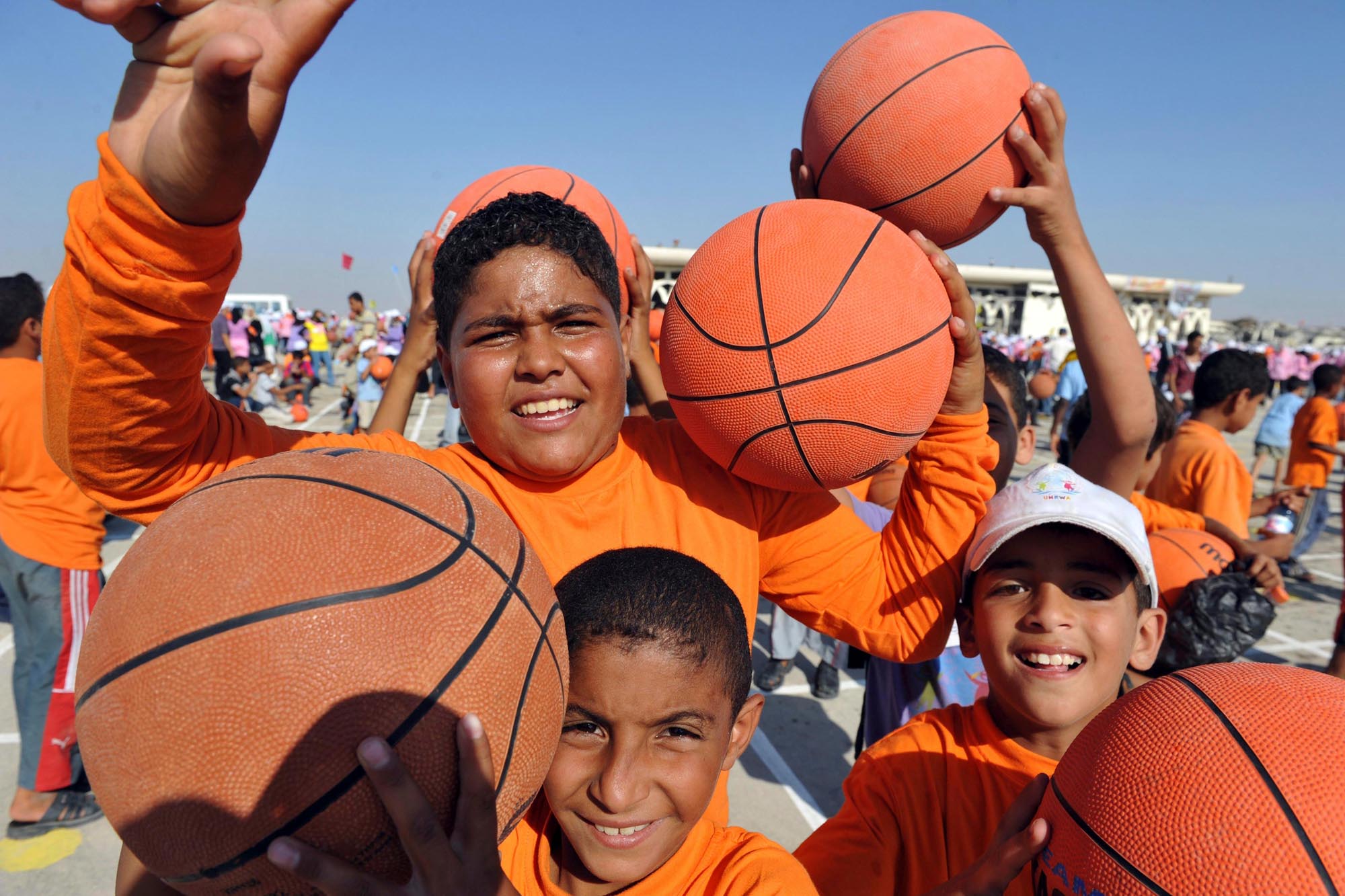
December 21 marks the anniversary of the first basketball game played in 1891 and was officially designated "World Basketball Day" by the General Assembly last year. Over time, basketball has grown into one of the most popular sports globally, transcending borders, cultures, and languages. It unites people from diverse backgrounds, fostering connections and breaking barriers. By bringing communities together, basketball promotes understanding, cooperation, and peace, exemplifying how sports can serve as a powerful tool for global harmony.
International sports events attract millions of fans worldwide, who eagerly tune in to watch their favorite teams and athletes compete. However, illegal streaming of these events not only harms athletes and broadcasters but also undermines the experience for fans. By choosing to watch through official channels, you help ensure that everyone involved—from the athletes who dedicate their lives to the sport to the broadcasters who bring the games to you—can benefit fairly.
Respecting copyright and supporting legitimate streams ensures that the excitement and integrity of the sport are preserved for all to enjoy.